


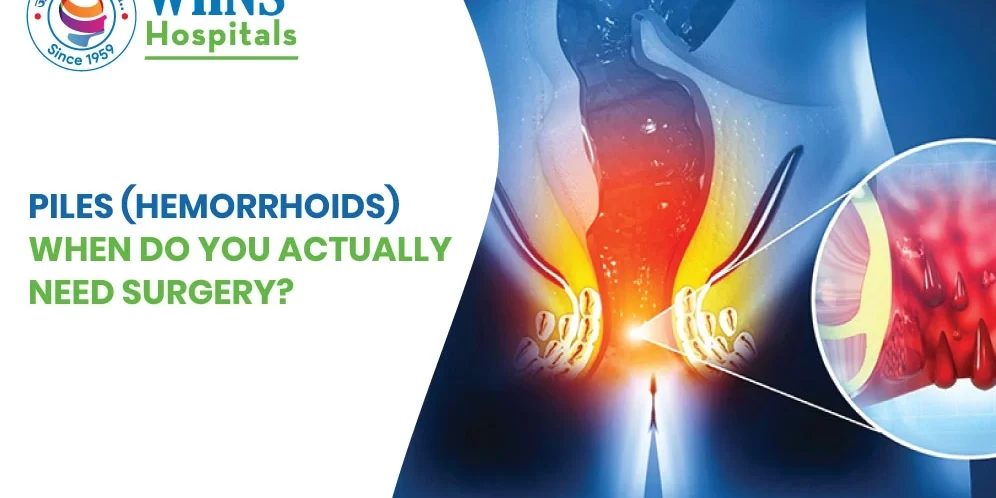
Piles are enlarged veins in the lower rectum, usually caused by chronic constipation, pregnancy, or a sedentary lifestyle. Not all pile cases require surgery, but medical procedures may be needed if symptoms are persistent, severe, or you have prolapsed piles.
Piles (Hemorrhoids): When Do You Actually Need Surgery?
Piles, one of the less-talked-about yet common medical issues, affects many. While it is mostly not dangerous, the pain, bleeding, and other symptoms can affect your daily life. From sitting comfortably to attending social events, piles can make simple activities super challenging.
Patients often wonder if surgery is the only effective piles treatment in Kolhapur. The short answer is no. Many patients never need to undergo surgery for hemorrhoids, but some cases may require surgical interventions. Let’s learn more about piles surgery, when it is necessary, and when you should pay attention to the warning signs.
What exactly are Piles?
Piles or hemorrhoids are enlarged veins in the lower rectum or around the anus. Piles are quite common, especially in people with chronic constipation, pregnant women, or those living a sedentary life with prolonged hours of sitting. Symptoms can vary depending on the type of piles. They can be located:
i) Inside the rectum (internal piles):
They are usually painless but may result in bleeding, especially when you pass bowel movements.
ii) Under the skin:
Located around the anus, also called external piles, these are usually painful and can be itchy.
Chronic constipation is the most common and avoidable cause of piles. Straining during bowel movements or sitting for extended periods on the toilet can strain the veins in your lower rectum, leading to swelling. Hormonal shifts during pregnancy and increased pressure can also increase the risk of hemorrhoids.
When Piles Need Surgery?
Most mild to moderate cases do not require surgery; however, if you experience these signs, visit the best general surgeon in Kolhapur at WIINS Hospitals for guidance.
1) Persistent Symptoms
You have tried medication, home remedies, sitz bath, and other non-invasive treatments, but didn’t notice any improvement. You have persistent symptoms that interfere with your everyday life.
2) Prolapsed Hemorrhoids
You have excessively large piles that are protruding and require manual pushing to go back inside. Such cases, especially if they occur frequently, might respond better to surgical treatment rather than home remedies alone.
3) Unbearable Pain
Extreme pain in patients with external piles can sometimes indicate thrombosis, blocked blood flow through the veins due to a blood clot. The clot may need to be surgically removed if it’s blocking circulation.
4) Heavy Bleeding or Complications
Seek emergency medical attention if you have severe, uncontrollable bleeding. Ongoing blood loss can lead to anemia over time. Surgery is also considered in cases with increased risk of complications, such as strangulation, inflammation, or infection.
Alternative Treatment Options for Piles
For most patients, symptoms may improve with alternative, non-invasive treatments, such as increasing your fiber intake to prevent constipation, keeping yourself hydrated, or taking stool softeners if needed. Warm sitz baths or topical creams, or medication are also effective treatments for piles.
Even for severe cases, the surgeon may consider less-invasive procedures first. For example, rubber band litigation can cut blood flow to the enlarged veins, making them shrink. Sclerotherapy is another treatment that involves injecting a special solution to shrink hemorrhoids.
