


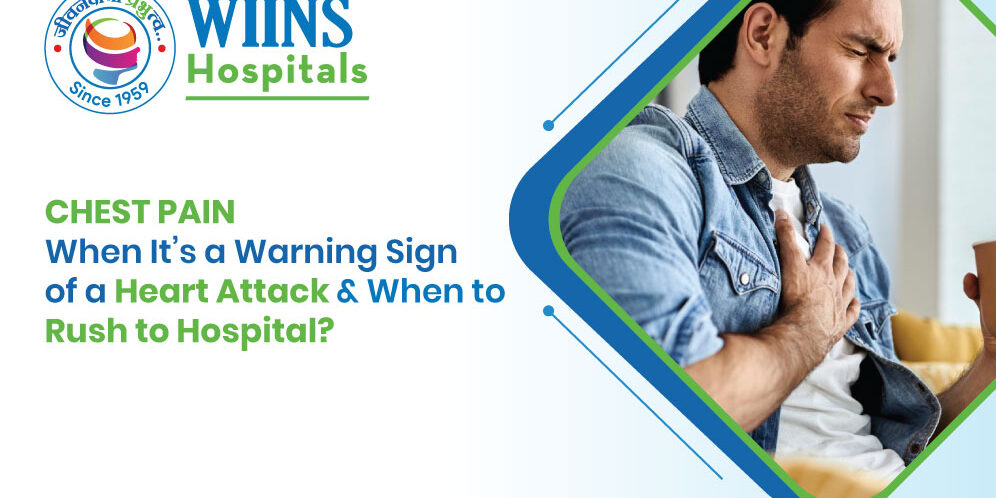
Chest pain due to a heart attack feels like a crushing sensation with pressure and tightness in the chest. Other symptoms include pain radiating to the arms, neck, jaw, shoulders, and back.
Chest Pain: When It’s Not Normal?
Chest pain is never a sign that can be ignored. Even mild chest discomfort that occurs only during physical activity can mean reduced blood flow to your heart muscles. Chest pain is also one of the most frightening symptoms. If you experience chest pain, discomfort, tightness, or unusual pressure, your mind might jump straight to the question “Am I having a heart attack”?
Chest pain can also be harmless. It may be due to indigestion, fatigue, anxiety, or muscle strain. It’s hard to tell whether the pain is harmful or a sign of a life-threatening medical issue. That’s why it’s advisable to see a cardiologist in Kolhapur if anything about your chest feels off.
Chest Pain from Heart Attack: Symptoms
Not every chest pain from a heart attack looks as dramatic as shown in movies. In fact, in many cases, the symptoms are so subtle that they are mistaken for fatigue or weakness. Pain starts gradually, with pressure or tightness in the chest reported as the first sign in many cases. Here’s what heart attack pain feels like:
- Crushing chest pain
- Tightness in your chest
- Pressure
- Burning or fullness
- Pain in the arms, shoulders, and back
The symptoms might come and go or persist. A few additional symptoms people having a heart attack might experience are sweating, nausea, vomiting, anxiety, or dizziness.
Note that heart attack symptoms aren’t the same for all. Women, especially, may have symptoms that do not involve crushing chest pain. For example, they might experience extreme fatigue, dizziness, shortness of breath, indigestion, or discomfort in the jaw or upper back.
Symptoms that Require an Immediate Visit to the Hospital
Certain warning signs of a heart attack require immediate medical attention. Here’s what you must never ignore.
- Persistent Chest Pain: Chest pain that lasts for more than 5-15 minutes and feels like heaviness or pressure should be immediately reported to a cardiologist.
- Pain in the Arm or Shoulders: Chest pain that spreads to the surrounding parts, including both arms, jaw, shoulders, neck, or back, is a warning sign.
- Difficulty Breathing: Shortness of breath that persists and appears with chest discomfort requires a visit to the cardiac hospital in Kolhapur.
- Sweating and Dizziness: If you feel lightheaded or are sweating excessively with chest pain, it can be a sign that your heart muscles aren’t getting enough blood.
- Nausea with Chest Pain: A typical sign of a heart attack in women and older people is chest pain with nausea. See a cardiologist immediately if you feel nauseated and have chest pain with other symptoms.
- Chest Pain during Physical Activity: Chest pain triggered by physical activity is another cause for concern. It may indicate angina.
If you notice someone with these symptoms, take them immediately to the cardiology department at WIINS hospital. Do not wait to see if symptoms improve; do not let the patient drive, and provide aspirin if the doctor advises.
