


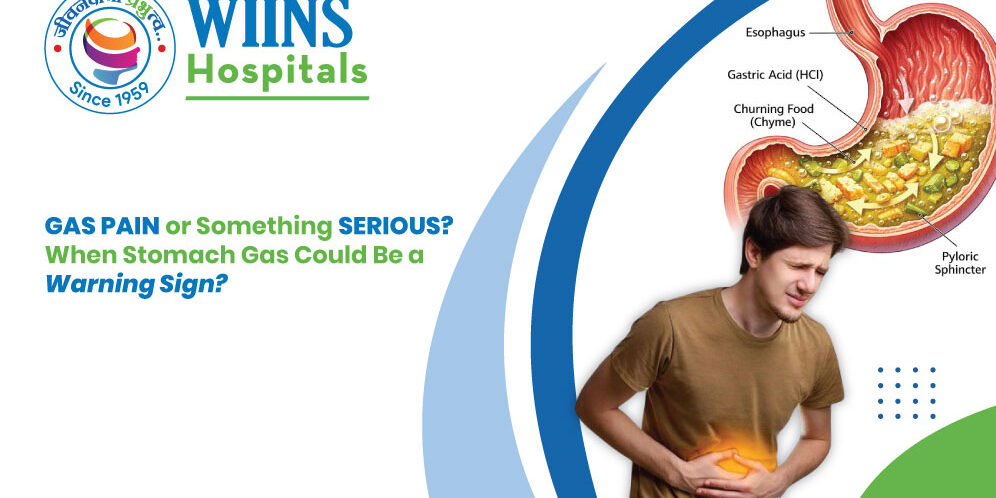
Gas pain moves around, comes and goes, and feels like a knotting sensation in your belly. Severe pain in a specific part of the abdomen, persistent pain, or pain accompanied by other unusual signs must be evaluated by a gastroenterologist.
Gas Pain or Something Serious? When Stomach Gas Could Be a Warning Sign
Your gastrointestinal tract plays a very important role in converting food into energy and the leftovers into waste, which is excreted from your body in the form of stools. How well your body digests food depends on many factors, such as what you ate, how much, how fast, and whether it was too spicy. Too much junk, eating too fast or too much, and having fizzy beverages can sometimes trigger gas.
According to a gastroenterologist in Kolhapur, gas and bloating are usually harmless. However, if they have become a persistent issue or are accompanied by other symptoms, it may be a sign that you should get checked by a professional at WIINS hospital.
What Gas Pain Feels Like
Typically, an average person passes gas around 12-20 times a day, and even a little more is considered normal. The question is, how do you know if it’s normal gas pain or an underlying gastrointestinal issue that needs medical attention?
Gas Pain Signs
- Cramps in the abdomen
- A feeling of fullness or bloating
- Sharp pain that comes and goes
- Pain moves around your abdomen
- Gurgling sound
- Passing excessive gas
- Burping frequently
The most notable sign is the pain that moves around from one side of the abdomen to another.
When Gas Pain Can Indicate an Underlying Issue?
Because gas pain is so common, many people ignore warning signs, thinking it’s only gas. These are the signs that there could be more going on:
- Pain, which, instead of moving, sticks around in a specific part of the abdomen
- Severe pain in the upper right side of the abdomen, which worsens after eating fatty or spicy meals
- Pain initiating at the belly button and radiating down to the lower abdomen might be a sign of appendicitis
- Severe abdominal pain with bloating, vomiting, and not passing stools might indicate intestinal blockage
- Fever alongside abdominal pain
- Rapid, unintentional weight loss with low appetite and excessive bloating are also warning signs that require an immediate visit to the gastroenterology hospital in Kolhapur.
How to Relieve Mild Gas Pain
Most of the time, gas pain goes away on its own. Here’s what may help:
Avoid Certain Foods: Greasy foods, carbonated beverages, spicy foods, and large meals must be avoided.
Swallow Less Air: Another common cause of gas is swallowing excessive air while eating or talking. Eat with your mouth closed. Avoid drinking with straws and do not chew gum if you have gas issues.
Eat Slowly: Slow eating and better chewing support digestion. Slow eating also allows your brain enough time to give your body signals that it is full. This prevents overeating, which is a common cause of gas pain.
Persistent abdominal pain that’s sharp, severe, and occurs with fever, vomiting, diarrhea, or blood in stools requires immediate medical attention.