


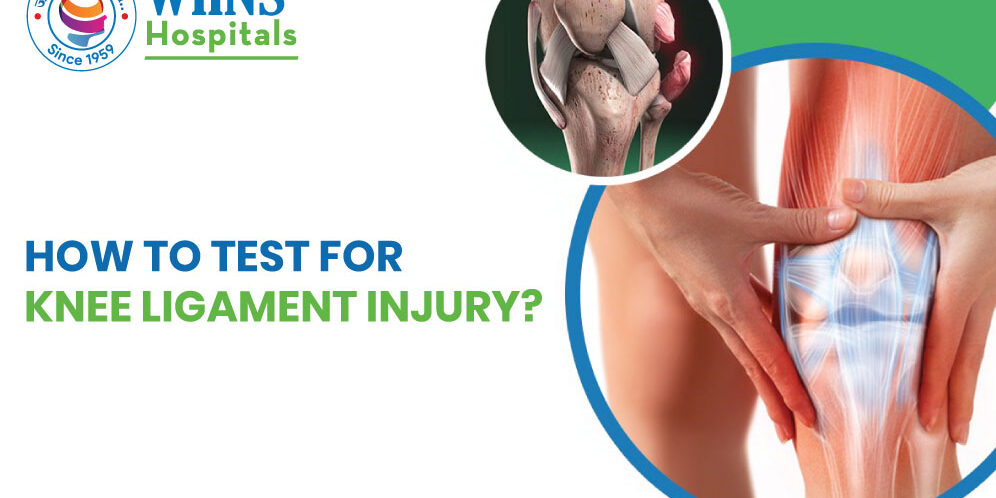
Injuries to ligaments are more common among athletes, people who exercise regularly, and even individuals who fall or twist their knees. Visiting an orthopedic hospital in Kolhapur is important if you suspect a ligament injury, as leaving them untreated can worsen your condition and might even increase the risk of long-term joint issues. In this post, we’ve listed some tips on identifying knee ligament injuries and tests that can detect them. Let’s take a look.
Common Symptoms of Knee Ligament Injury
Your knee is supported by four ligaments, which are responsible for ensuring smooth and balanced movements. They include ACL (anterior cruciate ligament), PCL (posterior cruciate ligament), MCL (medial collateral ligament), and LCL (lateral collateral ligament).
Injury to any of these ligaments can affect your knee’s stability. The ligament injuries can range from minor sprains to severe tears. Here’s how to know if you have sustained a ligament injury.
Pain and Swelling
The most obvious sign of a knee ligament injury is the sudden onset of pain, which can range from mild discomfort that worsens gradually to a sharp, shooting pain felt immediately after the injury. The intensity of the pain depends on whether the ligament is overstretched, partially torn, or completely ruptured. Pain is usually accompanied by swelling, which may occur within a few hours of the injury.
Instability of the Knee
A very common sign of ligament injury, especially with ACL tears, is the feeling that your knee ‘gives way’ or cannot support weight properly. Since the ligaments support stability and hold joints together, an injury can trigger the “giving way” sensation. This can be felt when walking, running, or climbing stairs.
Limited Range of Motion
The swelling and pain, combined with stiffness, can restrict your movements. If you find yourself limping or avoiding certain movements due to pain or discomfort, these can be signs that your ligaments are injured.
Initial Assessment
An orthopedic doctor in Kolhapur will ask about your symptoms, how your knee got injured, and where exactly you feel the pain. This helps them narrow down the ligament that might be involved in the injury.
Diagnostic Tests
Lachman Test: The Lachman test is used to assess damage to the ACL. For this, your doctor might slightly bend your knee and hold your thigh firmly with one hand. If the shin bone moves forward more than normal and there is a soft or absent endpoint, it may suggest an ACL tear.
Anterior Drawer Test: It’s another test to detect a torn ACL. Your healthcare provider will bend your knee to 90 degrees and pull the lower leg gently to see If the shin bone shifts forward more than normal compared to the uninjured knee, it can indicate an ACL injury.
Pivot Shift Test: An orthopedic doctor lifts your leg, and gently rotates and bends it to check how the shin bone responds. A positive result usually suggests an ACL tear, especially when combined with other findings.
Imaging Techniques
If the above test results are positive, further imaging tests may be necessary to assess the severity of the injury. For imaging, MRI is commonly used, as it can show pictures of ligaments, tendons, and other soft tissues. X-rays are not useful for ligaments but may be needed if the doctor suspects a bone fracture associated with the injury.
Conclusion
Although signs such as pain, swelling, and knee instability can indicate ligament injuries, only a proper orthopedic evaluation can confirm the diagnosis. At WIINS Hospitals, Kolhapur, our orthopedic team uses advanced physical tests, MRI, and imaging techniques to provide accurate diagnosis and the best treatment for faster recovery.