

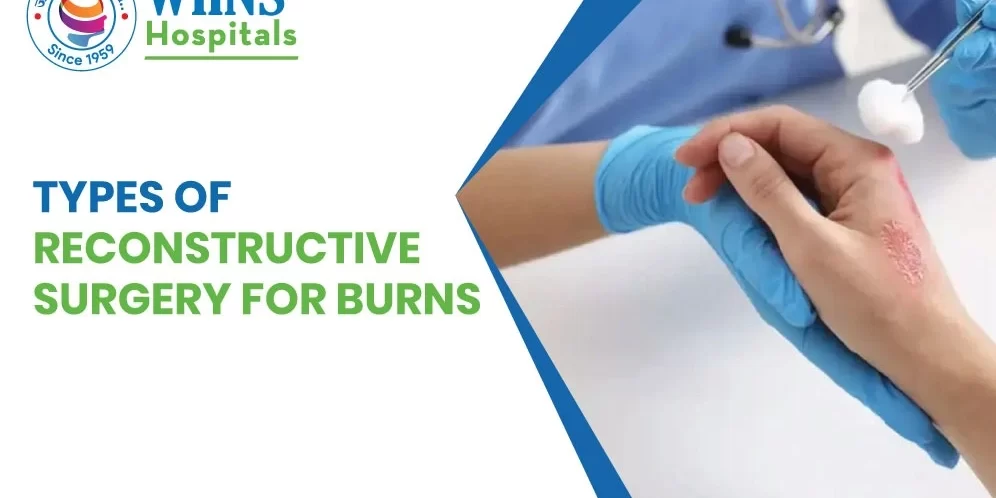
Burn injuries can take a toll on the patient’s physical and mental health. Burns are not only intensely painful, but they can also leave unsightly scars. Burns can also lead to contractures – tightened skin that restricts movement. The good news is that burn reconstructive surgery in Kolhapur has shown promising results. The surgery aims to fix not just your function and movement, but also your appearance. Here’s all about the different types of reconstructive surgery for burns, the processes, and benefits.
Skin Grafting
In severe burns, skin grafting can help restore both skin function and appearance. The common types of grafts used for the procedure include:
Synthetic Substitutes: Synthetic materials can be used as skin substitutes. They provide immediate wound coverage, especially useful in cases of extensive burns where donor skin is insufficient. to be transplanted to the burn site.
Autografts: The most common type is the autograft, in which the surgeon takes skin from another part of the patient’s own body, usually from an area that is less visible, and transplants it to the affected area. There’s minimal risk of rejection, as your own skin is used for covering.
Allograft: The skin from a donor can sometimes be used for temporary coverage until the patient is ready for a permanent graft.
Xenografts: This is another temporary grafting solution, where an animal’s skin is used to protect the wound and prevent fluid loss.
Tissue Expansion
If donor skin is not an option, tissue expansion can be an effective alternative that helps stretch or grow the skin over time. The surgeon inserts a balloon catheter near the burn site and fills the area with saline solution. With time, this promotes the adjacent skin to stretch and grow, covering the burn site. Tissue expansion is commonly used in cases where you need skin that matches the texture and color of the surrounding area, such as the face or neck.
Flap Surgery
For deeper burns that require coverage beyond the skin—extending to fat, muscle, and even blood vessels – flap surgery may be effective. Flap surgery may be an effective treatment option. In flap surgery, the tissues surrounding the wound are used to cover the burned area. In some cases, tissues along with blood vessels, fat, and muscle may be taken from another body part, such as the abdomen or buttocks, and transplanted to the burn site. These are transplanted to the burnt area.
Microsurgery
If the burn involves functionally important body parts, such as your hands, legs, or face, microsurgery can be highly effective. In microsurgery, a plastic surgeon in Kolhapur detaches the skin, fat, muscles, nerves, and blood vessels from another body part and transplants them into the burn site. Tiny blood vessels, along with the nerves, are reconnected to the recipient site. The blood should start flowing through these newly implanted tissues. This advanced technique is often used to reconstruct delicate structures such as fingers, eyelids, nose, and other vital body parts affected by burns.
Conclusion
Burn recovery is not only about wound healing. It’s also about restoring mobility, appearance, and confidence. With the expertise of the reconstructive team at WIINS Hospitals, Kolhapur, patients can achieve smooth recovery from both simple and complex burns through advanced surgical techniques.