


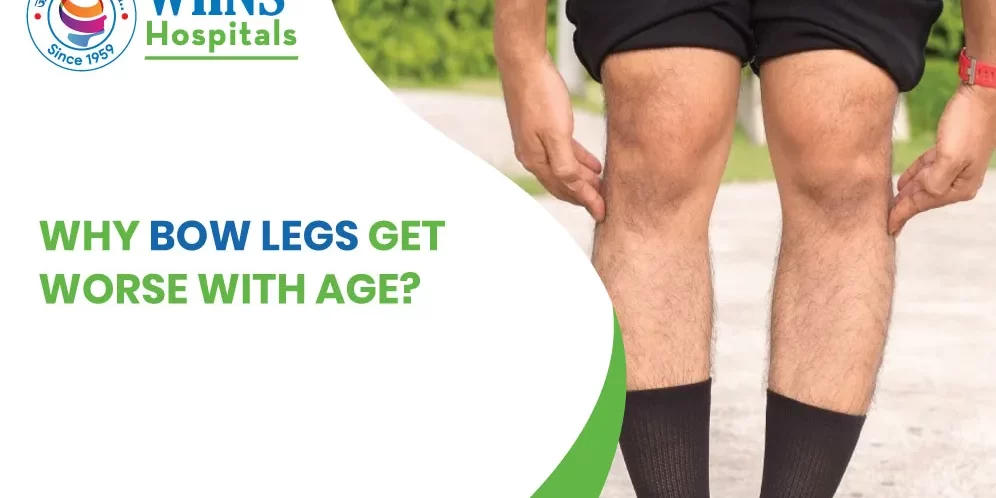
Babies tend to have bow legs, a medical condition in which the legs curve outward at the knee. It’s considered a normal part of their growth. In most cases, children outgrow this condition. However, in some children, bow legs can persist for years. It can also develop in an adult’s life.
Knowing what causes bow legs, what’s normal, and when bow leg treatment in Kolhapur is necessary is important to seek timely treatment. At WIINS Multispeciality Hospital we emphasize early evaluation to ensure proper growth and alignment. In this post, we’ve discussed some common reasons why bow legs might get worse with age.
Factors Contributing to Bow Legs
Here are the factors that make bowing more prevalent in adults.
Fetal Position: The most common cause of bow legs in infants is the fetal position in the womb. Their legs are tightly folded in the womb so they fit into the cramped space comfortably.
Genetic Predisposition: Bowing can occur due to family history. If your close relative was diagnosed with bow legs, there are chances you too may have misaligned bones and joints.
Medical Conditions: Sometimes, bowed legs that persist in babies older than 2-3 years can indicate an underlying medical condition, such as rickets, Blount’s disease, fracture, dwarfism, or lead poisoning.
Nutritional Deficiencies: Your bones need the right amount of calcium, Vitamin D, and phosphorus. Deficiencies of these vital nutrients, especially in childhood, can lead to weakened bones. This can increase the risk of having bow legs in adulthood.
Can Age Cause Bowing?
You may have noticed elders with bowed legs. With age, our bones lose density and strength. They become weak. As a result, the bones and joints in your knee may not be able to handle body weight effectively. This puts excessive pressure on one side of the knee, affecting the alignment. This change happens gradually. This is why bowing may appear mild initially in adults but become more pronounced later.
Arthritis can also contribute to worsening bow legs in adults. It’s a degenerative joint disease, in which the cartilage wears down, and bones start rubbing against each other during movement. Osteoarthritis of the knee joint can lead to uneven cartilage wear, making bow legs more pronounced.
Lifestyle and Activity Level
Exercise, especially low-impact exercises, can help strengthen muscles around your knee joint, which helps support your knees in the long run. However, repetitive activities or high-impact exercises performed with poor posture can put excessive load on one knee, making bow knees more obvious.
Likewise, your lifestyle plays a big role in your bone alignment. If the bones are already misaligned, a sedentary lifestyle and poor dietary choices that increase weight can put more pressure on your knees, making bowing worse over time.
Prevention and Management Strategies
Whether or not bow legs can be prevented depends largely on its causes. Here’s what you can do to prevent bowing from progressing.
- Increase your intake of vitamin D and calcium if you have deficiencies
- Practice low-impact physical activities, such as walking, swimming, and cycling regularly
- Eat a healthy and balanced diet to keep your weight in check.
When these preventive steps and conservative treatments fail, patients visit an orthopedic surgeon in Kolhapur to discuss surgical options. For severe bowing, a surgery can be helpful.