


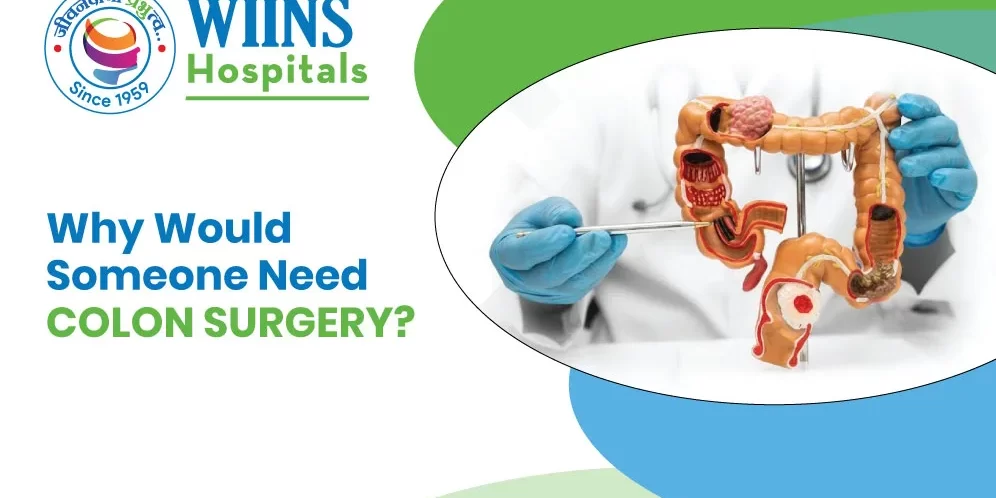
Colon surgery is required to treat colon cancer, diverticulitis, severe bowel inflammation, bowel perforation, or bowel obstruction.
Why Would Someone Need Colon Surgery?
The colon, the last part of your digestive tract, works silently until it becomes infected, inflamed, or diseased. By the time the food reaches the colon, nutrients from the food are already absorbed. The colon’s job is to absorb water from the remaining food waste, as well as form and store stool.
Hearing that you need colon surgery in Kolhapur might make your mind jump straight to the “C” word. It’s natural to assume that part of your colon needs to be removed because of cancer, but colon surgery may be recommended for other reasons too. Let’s first understand what colon surgery means.
What is Colon Surgery?
A colectomy is a surgical procedure that removes the diseased part of the colon or, in some cases, the entire colon. It may be recommended to treat colon cancer, ulcerative colitis, certain complications of Crohn’s disease, bowel obstructions, and other serious conditions where delaying treatment could become life-threatening.
Mostly, a colorectal surgeon in Kolhapur, such as those at WIINS Hospital, rejoins the healthy ends of the large intestine to restore your bowel function. If that can’t be done, a permanent or temporary stoma is created in the abdomen to facilitate bowel release into a colostomy bag.
When is Colon Surgery Needed?
Colorectal surgeons may prescribe medication, endoscopic procedures, and dietary changes initially to see if your symptoms ease up. Colectomy may be considered if conservative treatments fail. Here’s when surgery becomes an effective decision.
Colon Cancer
For localized colon cancer that’s contained within a specific portion of the colon, surgical removal of the tumor is a reasonable treatment option. It also offers the best chance of permanent cure.
Along with the affected colon, the surgeon may remove the surrounding lymph nodes, which are biopsied to check how much the cancer has spread and whether additional procedures, such as chemotherapy, are necessary.
High-Risk Colon Polyps
Most small and harmless colon polyps can be effectively removed with colonoscopy. The larger ones, located in hard-to-reach areas, or that can’t be removed with a colonoscope, may require colectomy. That’s especially needed when the surgeon suspects the polyps either already have cancer cells or are at an increased risk of becoming cancerous.
Diverticulitis
Small pouches, called diverticula, can develop in the colon wall. Diverticulitis occurs when these pouches develop infection or become irritated or inflamed. Although the infection can be managed with antibiotics, rest, and dietary modifications, repeated episodes of diverticulitis can damage the colon gradually.
Sometimes, inflammation creates scar tissue that narrows your colon, making it difficult for stool to pass. Surgery can be an appropriate treatment option if you have severe bowel inflammation.
Bowel Obstruction or Perforation
A blocked bowel can cause an inability to pass gas or stool. The pressure that builds up in the colon can cause abdominal pain, bloating, nausea, and vomiting. If blood supply to the colon is reduced or is blocked completely, it can become gangrenous or burst, both of which may require emergency medical surgery.
Bowel perforation is less common yet another medical emergency. A hole can form in the wall of the colon due to cancer, diverticulitis, reduced blood supply to the colon, and other causes. As a result, intestinal contents, including bacteria, can leak into the abdominal cavity, increasing the risk of peritonitis.