


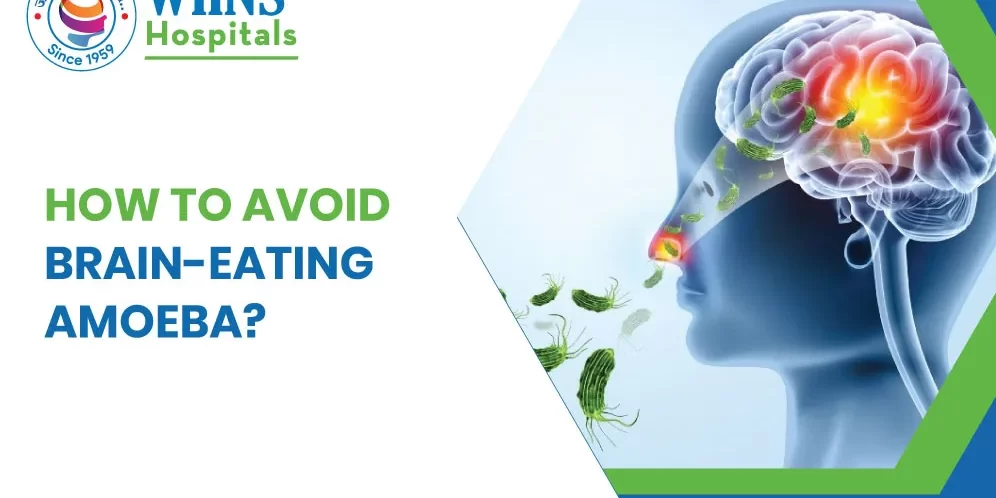
The term brain-eating amoeba is used for the microorganism called “Naegleria fowleri”. It’s a serious microorganism that can lead to a fatal infection (primary amoebic meningoencephalitis (PAM) if it travels up your nose and enters your brain.
The infection is extremely rare, but if someone gets infected, they must visit WIINS Hospitals, a leading neurosurgery hospital in Kolhapur, immediately to get the best chance at survival.
Where and How You Can Be Exposed
The amoeba thrives in summer when the temperature goes beyond 25–30°C. These are found in freshwater, mud puddles, hot springs, warm water tanks, pipes, and untreated swimming pools. These microorganisms may sound like tiny zombies that eat your brain, but brain tissues are not their actual food. They eat bacteria. However, when they enter the human brain, they treat the brain as their food source.
It’s also important to note that contamination doesn’t happen when you drink water polluted with Naegleria fowleri. It occurs when you indulge in swimming, diving, or other water-based sports activities that can push water up your nasal passage.
Once it enters your nose, it can find its way to your brain, where it multiplies rapidly. It produces an enzyme that breaks down your brain tissue. The amoeba needs a hot temperature to grow, making your body a perfect place for it to thrive. When your body fights the infection, it causes inflammation inside the brain, which can lead to swelling.
Preventative Measures
Certain preventive measures can help reduce your risk of getting primary amoebic meningoencephalitis.
- Avoid swimming in warm water during the summer
- Avoid activities that can force water into your nose
- Use swimming pools that are properly treated
- Use boiled and sterilised water when rinsing your nose
When participating in water sports or going swimming in warm water, consider wearing nose clips.
Recognising Symptoms Early
One of the common reasons for a high mortality rate in patients diagnosed with PAM infection is the late diagnosis. The symptoms often mimic the flu and aren’t very clear. However, early diagnosis can save lives. See a neurologist in Kolhapur immediately if you experience:
- Severe headache
- High-grade fever
- Nausea and vomiting
- Stiff neck
- Confusion
- Hallucination
- Seizures
Symptoms might show up within 1-9 days of infection. Remember, the infection spreads quickly and can cause life-threatening complications, such as coma and death.
Can PAM be Treated?
While survival is possible, it’s less likely. In most cases, people don’t know they are exposed to the brain-eating amoeba. By the time it’s diagnosed, it’s too late. Since the amoeba grows rapidly, early treatment is the only way to save the patient . A combination of drugs that can kill the amoeba is used for treatment. This includes Miltefosine and Amphotericin B, which must be administered with supervision.
Conclusion
Brain-eating amoeba might sound scary, but simple, practical steps can prevent exposure. It’s important to use warm water, especially untreated, with caution. Be careful about where you swim, the water you use for nasal rinse, and identify symptoms early to minimise your risk.