

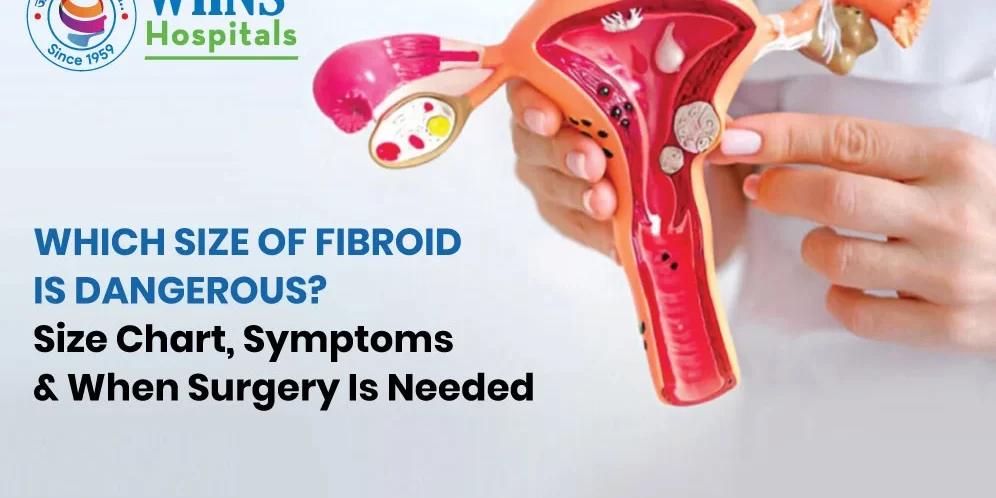
Fibroids, the benign growths in the womb, are usually harmless, but may cause symptoms depending on their location and size. Small fibroids are mostly asymptomatic, but larger ones (5-10 cm or larger) may require surgical intervention. Myomectomy and hysterectomy are the most effective surgical treatment choices for fibroids.
Which Size of Fibroid Is Dangerous? Size Chart, Symptoms & When Surgery Is Needed
Many women in their reproductive years are diagnosed with fibroids, usually benign growths in the uterus that may or may not come with symptoms. In many cases, fibroids are diagnosed during routine ultrasounds or pelvic exams.
Others, however, struggle with cramps, heavy bleeding, increased urination, and other symptoms that might interfere with their daily life. A gynecologist in Kolhapur can explain different treatment options for fibroids. In the meantime, let’s learn more about the fibroid size, symptoms, and when surgery may be necessary.
Fibroid Size Chart
Although they are mostly harmless, fibroids can cause symptoms, depending on their location, size, and number. Here’s a fibroid size chart:
| Size | Severity |
| Small (1-2 cm) | Usually asymptomatic. Diagnosed accidentally |
| Medium (3–5 cm) | Mild symptoms might appear, but only in some women |
| Large (5–10 cm) | It can cause heavy bleeding and painful periods |
| Very Large (10+ cm) | More pronounced symptoms often require treatment |
While the size of fibroids matters, they alone aren’t responsible for the symptoms. The location of the fibroids is equally important. Submucosal fibroids can lead to heavy bleeding even if they are small, while even the larger ones located outside the uterus may be asymptomatic.
Which Size of Fibroids can Cause Harm?
As mentioned above, many factors determine whether a fibroid requires treatment. Their size, location, and how many of them are in your uterus, whether you have symptoms, how severe the symptoms are—all matter. Generally, fibroids that grow larger than 5-7 cm warrant medical attention. Here’s when the gynecologist at WIINS hospital may discuss fibroids treatment:
- When fibroids grow quickly over a short period
- They grow larger than 10 cm
- You experience severe symptoms that interfere with your life
- You experience difficulty getting pregnant
- Fibroids press on the surrounding organs, such as your bowel and bladder
Fibroid removal surgery in Kolhapur is considered when fibroids have enlarged the uterus.
Symptoms of Fibroids
Here’s what women with fibroids might experience:
Heavy Periods: Fibroids growing inside your womb can cause heavy bleeding, which might sometimes lead to anemia.
Pelvic Pain: Larger fibroids can create a feeling of heaviness or pressure in your pelvis, and may also lead to pelvic discomfort or pain.
Increased Urination: Large fibroids that press on the bladder can increase how often you need to use the restroom.
Fertility Issues: Fibroids in certain locations might block fallopian tubes or make it difficult for the embryo to implant into the uterine lining.
Best Treatment Option for Fibroids
Surgical intervention is advised when fibroids affect your daily life or reproductive health. The best treatment for fibroids varies depending on your reproductive goals and health. For instance, surgery to remove just the fibroids, leaving the uterus in place, is for women who plan to get pregnant in the future.
If your priority is eliminating the chances of fibroid recurrence, hysterectomy is for you. However, with your uterus removed, you can’t get pregnant.