


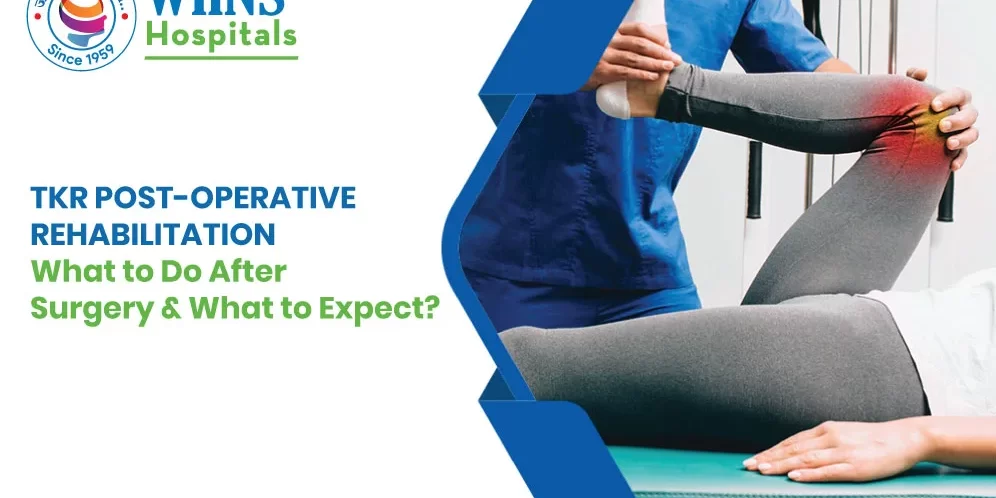
Total knee replacement is a major surgical procedure that provides long-term relief from chronic knee pain caused by arthritis or other conditions that have caused severe joint damage. In this procedure, an orthopaedic surgeon in Kolhapur replaces your damaged or worn knee joint with an implant that restores your normal range of motion. Let’s take a look at the detailed recovery plan after TKR surgery.
Immediate Post-Surgery Phase
Right after the surgery, you will be shifted to the recovery room, where the hospital staff will closely monitor your vitals. Your physiotherapist will encourage you to start gentle movements, such as sitting up, standing, and even walking using a walking aid. This helps prevent the risk of knee stiffness and blood clots.
It’s normal to experience pain in the surgical site during your recovery period. Your doctor will prescribe pain-relief medication and, in some cases, nerve blocks to relieve pain. The goal is to make pain manageable so that you can comfortably participate in physiotherapy sessions.
First Week After Surgery
Rest is crucial during recovery. Your knee might swell in the initial days, so make sure you get enough rest, elevate your legs above your heart level when lying, and use ice packs as advised. Talk to your physiotherapist to learn more about safe activities or gentle exercises to start at this stage. Take your pain meds regularly. Keep the incision site clean and dry. Ask your doctor when it’s safe to shower.
Weeks 2-4: Transition to Home
You might notice improvements in your mobility. Continue light physical activities that the surgeon has cleared you for and attend physiotherapy sessions regularly for muscle strengthening and flexibility. You can also use compression stockings if your doctor has advised. Rest, elevation, and ice packs are still important to manage pain.
Weeks 5-8: Building Strength and Flexibility
You will notice significant improvement in your knee joint by this time. Your physiotherapist might focus more on knee strengthening exercises, including step-ups, mini-squats, cycling, and more. You can also start walking with a cane or independently, depending on how well the incision is healing. Consistency is important. Continuing your exercises will help make your knee stable enough for your routine activities.
Long-term Recovery and Expectations
The complete recovery from TKR can take up to a year or longer in some patients, but you can expect to resume basic activities while your incision heals. Most patients feel normal within 3-6 months of the surgery. As you heal, you will be able to walk longer distances, practice cycling, and carry out other gentle exercises. TKR rehabilitation at WIINS Hospital, Kolhapur, is a good place to kickstart your recovery journey. It’s important to set realistic expectations. Some people experience mild stiffness and discomfort in the morning or after long hours of physical activity.
See your surgeon immediately if you experience unusual signs, such as fever, redness, warmth, and bleeding from the incision. Persistent swelling accompanied by debilitating pain that won’t get better with pain meds is also a red flag.