


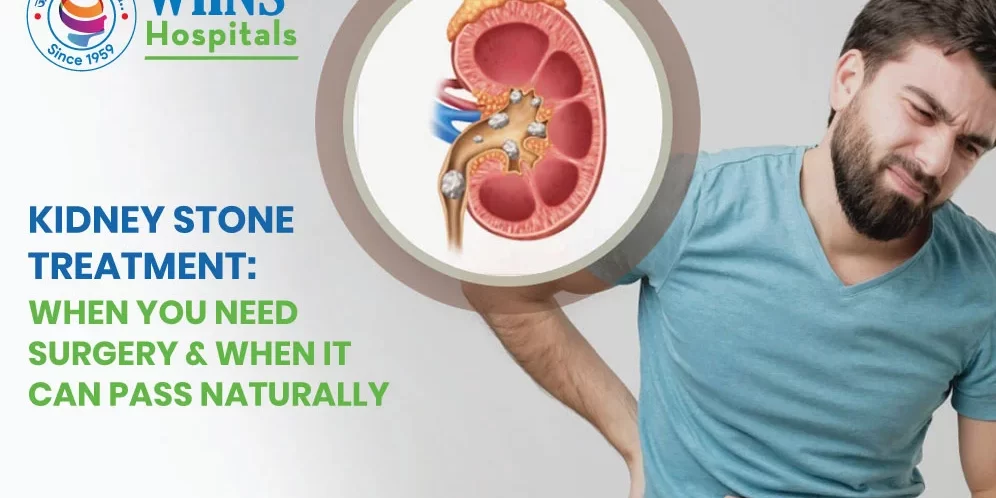
Kidney stones may pass naturally, but waiting may not be ideal for every candidate. Minimally invasive surgical procedures, such as Shock Wave Lithotripsy, Ureteroscopy, and Percutaneous Nephrolithotomy (PCNL), may be ideal for stone removal.
Kidney Stone Treatment: When You Need Surgery & When It Can Pass Naturally
Increased concentration of certain minerals and salt in your urine can increase the risk of kidney stones. These small stones, often associated with intense pain and urination issues, may sound alarming, but you don’t always need surgery to remove them.
Some kidney stones can effectively travel down the narrow tubes (ureters) and into the bladder, where they can exit your body through urine. All you need is hydration, patience, and the guidance of a urologist in Kolhapur. Let’s see which kidney stones require treatment, which may pass naturally, and which require surgical intervention.
Kidney Stones: The Classic Symptoms
Symptoms may not be prominent for smaller stones. In fact, they may pass naturally without causing significant discomfort, but the larger ones can be painful. The pain occurs when the stone gets trapped in the ureter, blocking the urine flow. Here are the classic signs of kidney stones:
- Debilitating pain in the back or sides, often radiating to the groin
- Pain that comes in waves
- Frequent urge to urinate
- A burning sensation during urination
- Nausea
- Blood in the urine
You may need immediate kidney stone treatment at WIINS hospital in Kolhapur if these symptoms appear alongside fever and chills. This may indicate an infection.
Can Kidney Stones Pass Naturally?
Yes, that’s the most reassuring part. Many kidney stones, which are smaller in size, around 4-5mm or less, can pass naturally through urine. It may take a week or two, and in some cases, up to a month or longer for these stones to pass on their own.
Increasing your fluid intake and taking prescription drugs for pain relief can make the process smoother and more manageable. However, urologists recommend this approach when your kidneys look healthy and are functioning normally.
When is Surgery Necessary?
If your urologist believes waiting could do more harm than good, they may start looking at treatment options, possibly a surgical removal.
Surgery is usually advised when kidney stones are larger, have blocked ureters, there’s an active infection, or it’s affecting your kidney function. Even a smaller stone may require surgery if it causes persistent pain or urinary issues.
Surgical Removal of Kidney Stones
Earlier, surgery would mean a large cut in the back for better access to the kidneys. Modern treatment options are less intimidating and involve shorter hospital stays and faster recovery. Here are the most popular minimally invasive surgical procedures:
Shock Wave Lithotripsy (SWL): The procedure uses sound waves, which target the kidney stones and break them into smaller fragments, so they can pass naturally over weeks.
Ureteroscopy: A thin tube is passed through the urethra and is guided up the bladder and the ureters. It gives a detailed image of the urinary tract and the location of the stones. The stone is then removed in one piece or is broken into smaller pieces using a laser for easy removal. Percutaneous nephrolithotomy (PCNL): For larger stones, PCNL may be recommended. It’s comparatively more invasive, as it involves a small incision, but it is still less invasive than an open surgery. A small cut in the back allows a clear view of the kidneys, making stone removal easier.