


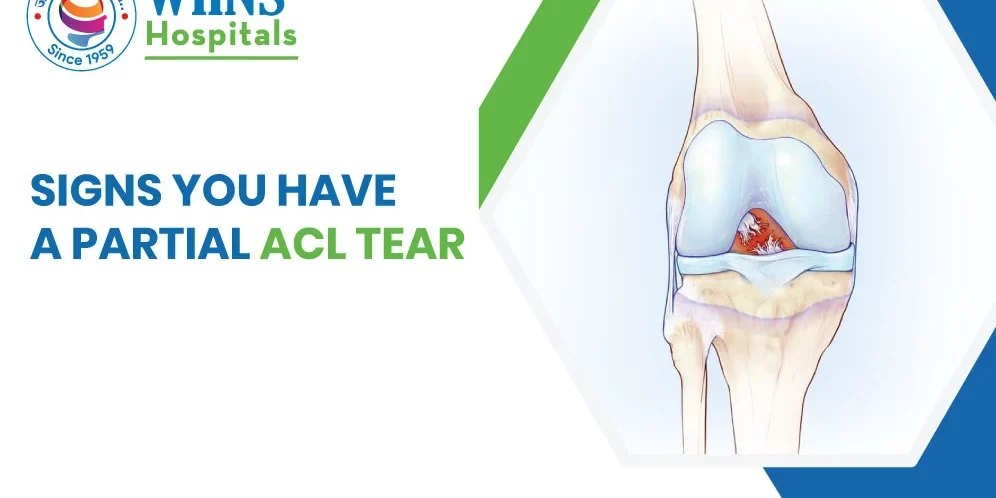
Diagnosing a partial ACL tear can be difficult, as it may not always cause the obvious symptoms, such as “knee buckling”. The primary role of the ACL is to stabilize your knee. It connects your thighbone to the shinbone and prevents the knee from rotating or moving forward beyond its capacity.
Sometimes, awkward movements, a sudden twist, or slips can cause partial ACL tears. It’s important to recognize these tears early, as this may help you visit an orthopedic hospital in Kolhapur and get timely treatment.
Common Signs of a Partial ACL Tear
Knee Pain
In partial tears, knee pain may be mild to moderate. It’s especially felt when doing certain movements, such as rotating your knees, climbing stairs, standing up after sitting for a while, or performing other activities that might put pressure on the affected knee. A partially torn ACL may not completely keep you from walking, but the pain can be severe when turning or twisting the knee.
Swelling
Swelling appears within a few hours of the injury. It occurs due to internal bleeding from the damaged blood vessels. If there’s a partial tear, the swelling may not be as extreme as that in a completely torn ACL, but it’s still prominent. If your knee looks warm to the touch, red, and puffy, it’s time to schedule a visit to the ACL specialist in Kolhapur.
Instability
The hallmark sign of a torn ACL is knee instability or the feeling that your knee might “give out”. The main function of the ACL is to keep your knee stable. When it’s partially torn, you might experience your knee getting wobbly, especially when you move suddenly, walk on rough surfaces, or change directions swiftly.
Limited Range of Motion
A partial ACL tear can lead to fluid accumulation in the knee, resulting in swelling. The injury also causes muscle stiffness and pain, which might restrict your movements. It feels like your knee is stuck in a certain position, and it won’t move. If you can’t bend or straighten your knee after an injury, this could be a sign that your ACL is damaged.
Popping Sensation
Remember the sound you heard when you sustained the knee injury? If it were a snapping or popping sensation, your ACL might be partially or fully torn. Although the popping sound is more common when you have complete ACL tears, it can occur in partial ACL tears, too. Afterward, you may feel difficulty keeping your knee stable.
When to See a Doctor
See an orthopedic doctor at WIINS Hospitals if you experience persistent, severe pain in the injured knee with visible swelling, limited range of motion, and warmth. Continuing physical activities with a partially torn ACL can elevate your risk of sustaining further injuries due to knee instability. There’s also a risk that the ACL might tear completely or damage the surrounding structures, such as the meniscus or cartilage.
Conclusion
If you notice the above symptoms, visit a doctor for proper evaluation. They may conduct the Lachman or pivot shifting test with an MRI to detect the severity of the tear.