


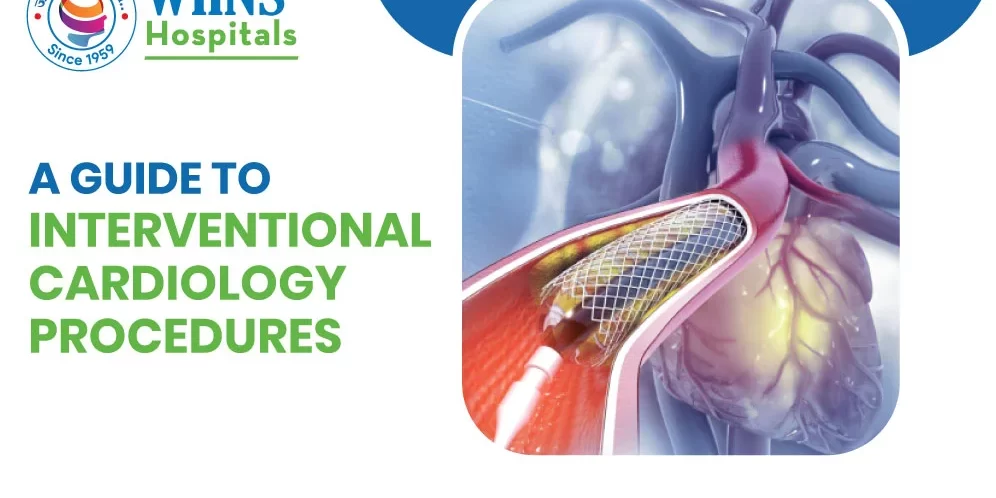
The advice of going through an open-heart surgery sounds intimidating. Fortunately, tech-related advancements in medical science have created modern, less-invasive, or interventional approaches for complex cardiology procedures.
At WIINS Hospitals, we have the top heart surgeon in Kolhapur who is qualified and trained to perform interventional heart surgeries without a large incision on the chest. The procedures involve a small skin puncture through which a catheter (thin tube) is guided to your heart. Here’s more about common interventional cardiology procedures.
Common Types of Interventional Cardiology Procedures
Angiography
Angiography is a diagnostic procedure that’s used to detect narrowed arteries or any blockages. The surgeon injects a special dye through the catheter and reviews the X-ray images to assess how well blood flows through the arteries.
It’s often the first step in diagnosing artery blockage or other damages that warrant other cardiology procedures.
Angioplasty and Stenting
Angioplasty is a common interventional cardiology procedure that’s widely performed in the best cardiac hospitals in Kolhapur today. It’s a less invasive alternative to open-heart surgery.
During angioplasty, your surgeon inserts a catheter with a balloon attached to its tip into the narrowed artery. They inflate the balloon as soon as it reaches the blocked part to widen it. They place a stent in the affected part so it stays open.
Angioplasty is a life-saving procedure for patients who’ve suffered a heart attack. It also eases chest pain and shortness of breath due to angina.
Atherectomy
In complex cardiology cases, the surgeon may recommend atherectomy, a procedure that breaks down and removes calcified plaque. In angioplasty, the plaque is moved against the artery walls.
In atherectomy, a cutting blade, a rotating shaver, or a laser can be used to remove the plaque that has accumulated inside the artery. Although less common than angioplasty, atherectomy is considered when the plaque is too hard to be pushed against the artery wall.
When is Interventional Cardiology Needed?
Interventional cardiology is needed when you have tried lifestyle adjustments and conventional treatments, but they have failed to ease your symptoms. These might also be needed in patients who are at risk of having a heart attack. A few common procedures that require a visit to the interventional cardiologist include:
Coronary Artery Disease: Angioplasty and stenting may be necessary in a patient with CAD. It occurs when excess fat, cholesterol, and other substances build up in your arteries over time. This buildup narrows or blocks your arteries.
Heart Attack: A heart attack occurs when your heart doesn’t get sufficient blood. At this point, a quick interventional procedure to restore blood flow to the heart is necessary to prevent heart damage.
Peripheral Artery Disease: Arteries in other parts of your body, such as your legs, can also become narrow.
Conclusion
Interventional cardiology has revolutionized the way heart issues are treated. The conditions, which earlier required a complex open surgery, can now be treated promptly with angioplasty and atherectomy. These have shorter recovery periods and are often quite effective in addressing most heart problems.