

No, a fistula cannot be cured without surgery. Medications, such as antibiotics and painkillers, can help with the infection and pain, but they can’t close the tunnel.
Can a Fistula Be Cured Without Surgery?
Can an anal fistula be cured without surgery? That’s a common question people with a fistula ask a general surgeon in Kolhapur. Unfortunately, fistulas do not heal on their own, and most may not close with medication alone.
Most cases require a surgical intervention. That said, sometimes medication and other less-invasive treatments can help manage your symptoms and reduce discomfort to some extent. Let’s see when an anal fistula requires surgery.
What is an Anal Fistula?
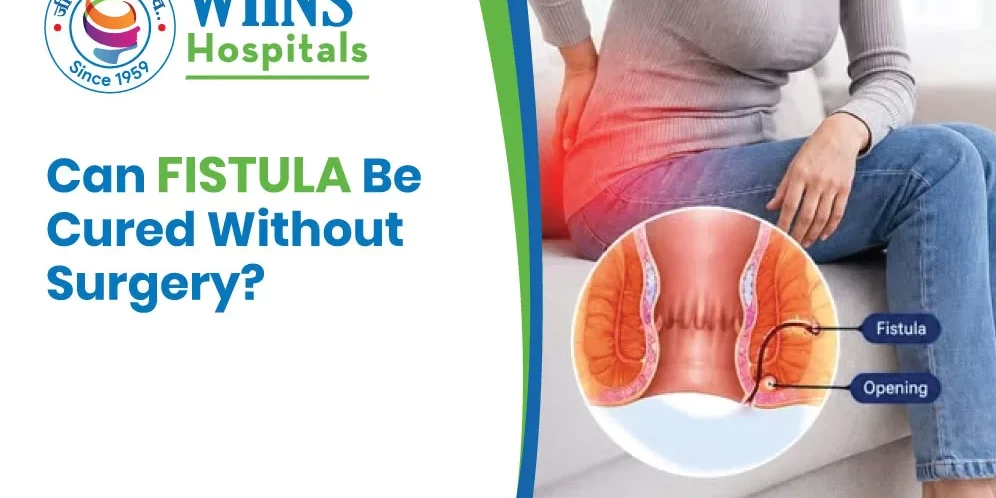
A fistula refers to a tunnel that connects two body parts that aren’t normally connected, such as an organ with another, or an organ with the skin, or other areas. Anal fistulas are the most common. They form between the inside of your anal canal and the skin surrounding the anus, connecting both ends.
A fistula occurs when an infection inside the anus leads to a collection of pus, called an abscess. While the pus might drain and your symptoms can be temporarily relieved, the tunnel won’t close. It’s usually left behind.
Medicines for Anal Fistula: Do They Work?
While prescription medication can help reduce discomfort or other symptoms associated with fistulas, they alone can’t close the passage between the anal canal and the skin around the anus. Antibiotics may be needed if a bacterial infection is suspected.
Surgical Treatments for Anal Fistula
Surgical treatment can be used as first-line treatment for anal fistulas that won’t respond to medication, home remedies, or other non-invasive procedures. The goal is to treat the fistula without disturbing the muscles that control bowel movement. Let’s look at some common anal fistula procedures performed at WIINS hospital.
Fistulotomy
For simple fistulas, fistulotomy may be helpful. In this surgery, a cut is made along the passage to open it and allow the inside to heal properly. Instead of closing the tract, the fistula is left open, preventing pus from collecting and new infection from forming. Over time, new tissue develops around the area.
Seton Placement
While the above procedure might work for simpler fistulas that do not involve a large part of the anal sphincter muscles, it may not work if the tract is found passing through or between the muscles.
Since the sphincter is responsible for controlling your bowel movements, cutting the fistula tract may not be a viable treatment option. For such cases, a rubber band could be placed inside the tract to let it heal, without affecting the sphincter muscles.
LIFT Procedure
LIFT is another fistula surgery in Kolhapur that can help disconnect the fistula while leaving the sphincter muscles unharmed. It involves making a small incision in the skin to find the fistula between the muscles. Once found, the fistula is stitched and cut between the tied sections, so that both ends of the tract are disconnected.
Laser Treatment
In selected patients, laser treatment can prove to be an effective choice of treatment to close the fistula. It involves inserting a laser fiber into the tunnel and delivering energy to close the tract. The technique is comparatively less invasive than conventional surgery, but may not work for all cases of fistulas.