


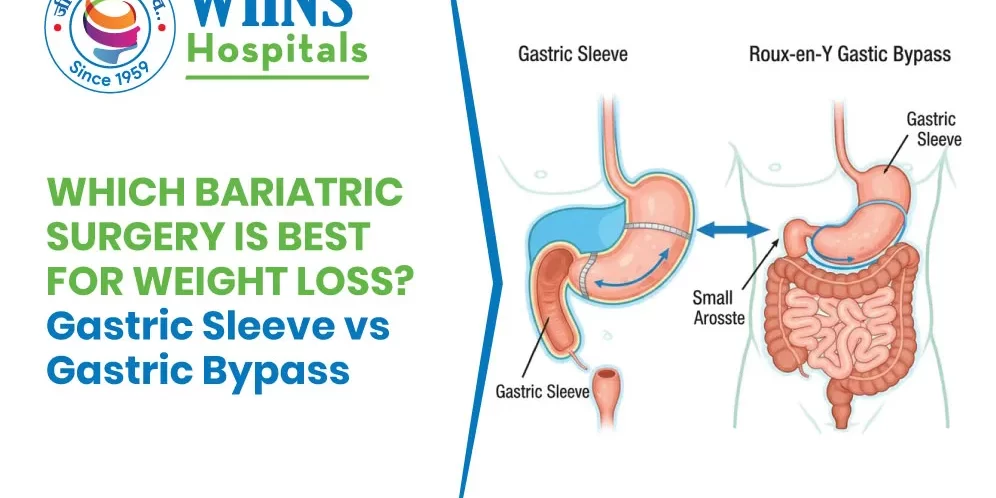
Gastric sleeve and gastric bypass are types of bariatric surgeries that help people with obesity achieve significant weight loss. Gastric sleeve reduces stomach size by 80 percent, while gastric bypass shrinks the stomach and rearranges the small intestine to change metabolism, stomach size, and your hunger pattern.
Which Bariatric Surgery Is Best for Weight Loss? Gastric Sleeve vs Gastric Bypass
Obesity is not just a cosmetic concern. As much as it affects your confidence, a high body BMI also has real health concerns, such as increased risk of type 2 diabetes, fatty liver, stroke, osteoarthritis, gout, kidney disease, fertility problems, and certain types of cancers (to list a few).
When medication, diet, physical activity, and structured weight loss programs do not help, bariatric surgery in Kolhapur might sound like an effective decision. The two most common procedures that account for most of the bariatric surgeries performed today include gastric sleeve and gastric bypass. Both procedures help shed weight, but in different ways.
Gastric Sleeve: How It Works
Gastric sleeve surgery involves removing around 80% of the stomach, including the stomach tissue responsible for producing the hunger hormone ghrelin. The surgeon leaves a small, banana-shaped pouch.
Since your stomach becomes narrow, your appetite decreases naturally, and you’ll feel full after eating small meals. This results in gradual, automatic weight loss. Your intestines remain untouched during the procedure, so food doesn’t reroute.
Pros
- Simpler procedure
- Low risk of nutrient malabsorption
- Effective weight loss
Cons
- Comparatively less weight loss than gastric bypass
- Increased risk of acid reflux
Gastric Bypass: How It Works
Gastric bypass doesn’t only shrink the stomach size to an egg-sized pouch, but also rearranges the small intestine, changing calorie and nutrient absorption. A bariatric surgeon at WIINS in Kolhapurcreates a small pouch using the upper stomach tissue and connects it directly to the lower segment of the small intestine.
A smaller stomach promotes the feeling of fullness after eating little, while the changes in how food travels through the intestines affect your metabolism and may also put type 2 diabetes into remission.
Pros
- It helps lose significant weight, often faster than other procedures
- Stronger metabolic changes
- It may be used for selected patients with type 2 diabetes
- Low risk of acid reflux
Cons
- A complicated procedure, as it involves both reducing stomach size and rearranging the digestive tract
- Increased risk of nutritional deficiencies
Gastric Sleeve Vs. Gastric Bypass: Which is Better?
The decision of choosing between the two is not as simple as picking a surgery that helps achieve maximum weight loss. Instead, your doctor will carefully evaluate your weight, eating patterns, health, and long-term weight management goals.
Gastric bypass results in comparatively more weight loss than gastric sleeve. That, however, doesn’t make gastric bypass a better option. The weight loss in these procedures is considered along with their risks, long-term health status, and nutritional effects.
For example, losing fewer pounds through gastric sleeve, with fewer complications, a simpler procedure, and no major changes to the intestines, might be a better choice for some people in the long run. However, for those who want to lose significant weight quickly or have chronic medical conditions that can benefit from re-routing the digestive tract, a gastric bypass may be a more appropriate choice.