


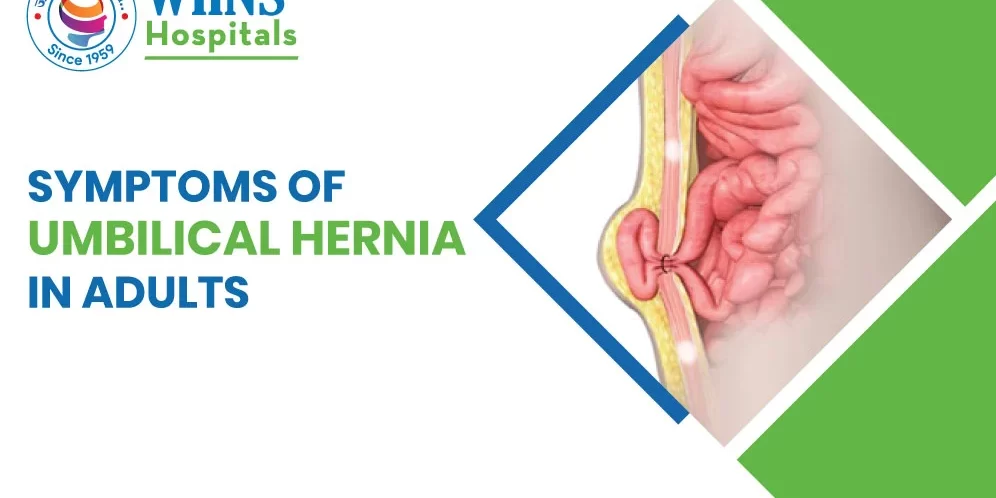
Have you ever noticed a bulge around or on the navel in infants or toddlers? It’s called an umbilical hernia. While the condition is common in children under 5, adults can get it too. The bulge seems soft. It may or may not be prominent always.
Sometimes, the bulge is noticeable when you cough, lift heavy stuff, or strain when passing bowel movement. The hernia may seem alarming at first, but in most children, it’s harmless and usually disappears on its own. However, adults should see a hernia specialist in Kolhapur if they notice a hernia-like bulge near their navel.
What Exactly is an Umbilical Hernia?
An umbilical hernia develops when a part of your small intestine or abdominal tissues pushes through a weak abdominal wall, creating a soft bulge. Adults can develop it due to chronic coughing, obesity, pregnancy, and frequent heavy lifting. It might also develop in people with a history of abdominal surgery, as the surgery can weaken the abdominal muscle walls. It may be painless in children, but adults might experience discomfort. The hernia in adults may become enlarged and cause symptoms if not treated.
Common Symptoms of Umbilical Hernia in Adults
Visible Bulge: The most obvious sign of an umbilical hernia in adults is the visible lump, often defined as swelling near the navel. The lump may completely disappear when you lie down, only to return when you stand up or strain your abdominal muscles.
Pain or Discomfort: Many adults experience pain with certain movements, such as when lifting heavy objects, bending over, laughing, or heavy lifting. The pain can get worse if the hernia grows.
Swelling or Tenderness: Sometimes, the hernia site might become red or warm to the touch. If you experience tenderness along with swelling, seek immediate medical help at the hernia surgery hospital in Kolhapur, as it might be the early sign of strangulation (when the blood supply to the trapped tissues is cut off).
Digestive Issues: If the hernia has grown larger over time, there’s a risk of digestive discomfort due to partial intestinal blockage. Symptoms include nausea, vomiting, and bloating. These symptoms almost always require medical evaluation.
When to Seek Medical Attention
Small umbilical hernias that are painless may seem harmless, but they can become dangerous if they grow larger or you experience these symptoms:
- Sharp pain near the hernia site
- Swelling and redness around the hernia
- The bulge doesn’t go back in, even when you are resting
- Persistent nausea, vomiting, and constipation
- The hernia is warm to the touch
These symptoms can be a sign of a strangulated hernia, a serious medical issue that might lead to tissue death.
Conclusion
The symptoms of an umbilical hernia are pretty obvious. The bulge near or on the navel with pain and discomfort is a sign of an umbilical hernia. The surgery may be needed to place the bulging tissues back in place and reinforce the weakened muscle walls with a mesh.
The good news is that the surgery for umbilical hernia at WIINS Hospitals is a safe and highly effective procedure. You can return to your routine activities after a brief recovery period.