


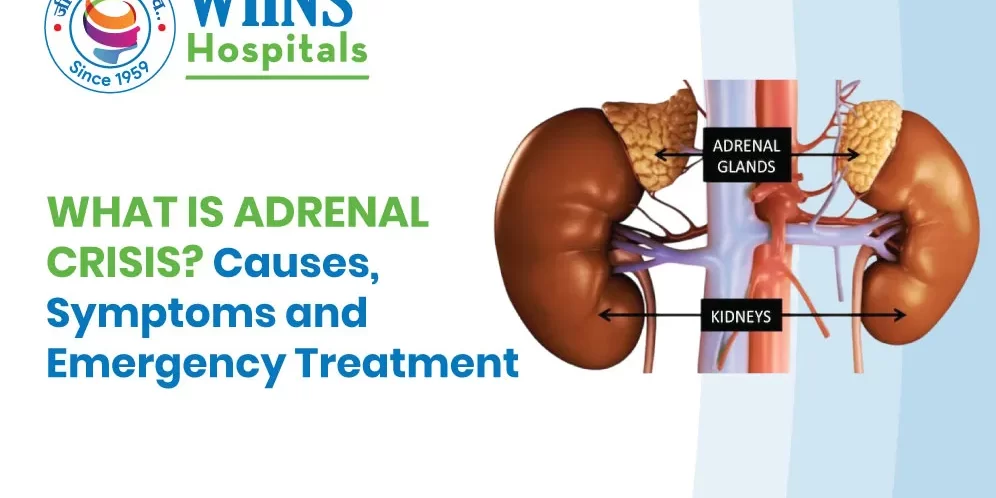
Adrenal crisis occurs when cortisol drops suddenly, causing electrolyte imbalance, vomiting, diarrhea, confusion, and low blood pressure and sugar levels. Immediate treatment is necessary to stabilize the patient’s vitals.
What Is an Adrenal Crisis? Causes, Symptoms, and Emergency Treatment
Adrenal crisis occurs when your adrenal glands, the small glands sitting on top of each kidney, do not produce adequate cortisol to maintain your body’s natural functions. It’s a medical emergency that requires immediate adrenal crisis treatment in Kolhapur.
Let’s understand what adrenal crisis is in detail, when it occurs, and warning signs.
When Does an Adrenal Crisis Occur? Common Causes
When you are fighting an infection or are recovering from an injury or surgery, your body needs cortisol, which regulates your energy, blood pressure, and blood sugar levels, while controlling inflammation. The hormone also allows you to manage physical and mental stress by staying alert.
It releases glucose into your bloodstream so that your brain and muscles can function when you haven’t eaten for a while. Additionally, your adrenal glands also release aldosterone, which holds on to sodium and removes potassium, thus maintaining minerals balance.
Causes of Adrenal Gland Insufficiency
Long-term Steroid Use
One of the causes of adrenal gland insufficiency is long-term use of corticosteroid. This sends your brain signals that there’s cortisol-like hormone available from another source, so it stops producing adequate cortisol.
When you stop the medication suddenly or significantly reduce its dosage, your adrenal glands might not make up for the lost cortisol.
Your Adrenal Glands are Damaged
The condition can occur when your adrenal glands stop producing cortisol because the glands themselves are damaged. In primary insufficiency, lack of this hormone can cause potassium to build up while removing salt, which can put stress on your heart rhythm.
Pituitary Gland Doesn’t Function Properly
When your pituitary gland is damaged or isn’t functioning properly due to chemotherapy, radiation therapy, or an injury, it may not send your adrenal gland a signal to produce cortisol. This is called secondary adrenal insufficiency.
But what happens when the cortisol levels drop suddenly? Also called adrenal crisis, this medical condition can cause dehydration. It can also drop your blood sugar and blood pressure levels severely. It’s declared a life threatening medical emergency requiring prompt medical care.
Symptoms of Adrenal Crisis
Many people with adrenal insufficiency experience a range of symptoms which may lead up to a collapse when not addressed in time.
For example, you may have low blood pressure, followed by nausea and vomiting, diarrhea, a deep pain in your lower back, and fatigue. Here’s a quick look at the signs you may be having an adrenal crisis:
- Severe weakness and fatigue
- Nausea, repeated vomiting, loss of appetite, and diarrhea
- A severe drop in blood pressure and dizziness
- Low blood sugar
- Dehydration
- Electrolyte imbalance
- Skin darkening
- Confusion and changes in your consciousness
Emergency Treatment for Adrenal Crisis
Treatment mainly involves injecting a corticosteroid, which compensates for the lack of cortisol production. An endocrinologist in Kolhapur may administer intravenous fluids to restore fluids and support blood pressure.
While stabilizing your vitals, your doctor at WIINS Hospital may also look for the underlying cause of adrenal insufficiency to prevent future recurrences.
