


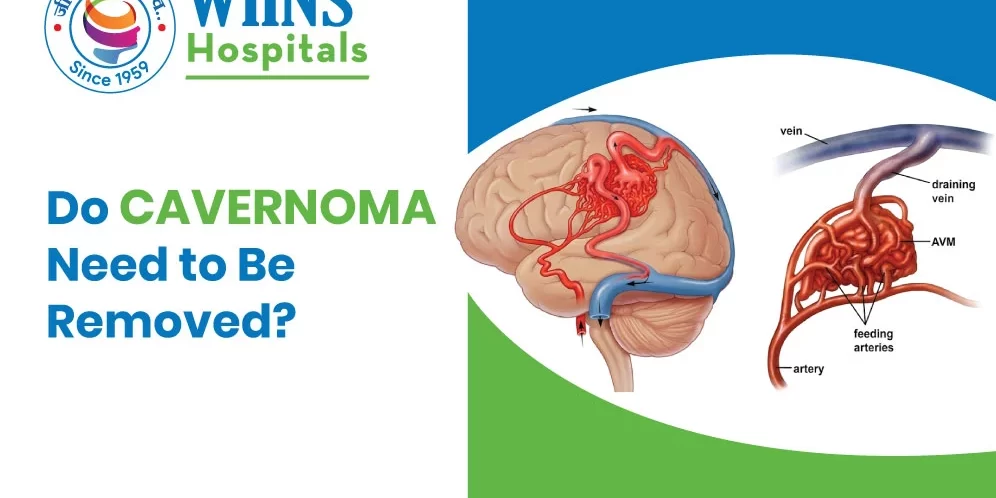
Cavernous Haemangioma doesn’t always need removal, especially if the lesion is stable, asymptomatic, and is not located near any vital structures. Surgery may be needed if this abnormal cluster of blood vessels affects your organ’s function, causes bleeding in the brain, or causes other symptoms.
Does a Cavernous Haemangioma Need to be Removed?
If you have been told that you or someone you love has a cavernous haemangioma, you must wonder whether it needs surgical removal and how severe it can be if not removed.
Whether or not you need brain cavernoma treatment in Kolhapur depends on many factors, especially its size and location, whether you have any symptoms, and whether it is stable or growing. To understand when surgery is necessary, it’s important to first understand what a cavernous haemangioma is.
Understanding Cavernous Haemangioma
Cavernous haemangioma is a cluster of tangled small blood vessels that can develop in your brain, brainstem, and spinal cord. They can also develop on your skin, liver, and other body parts. On your skin, they look like raised, purplish or red bumps.
However, this abnormal cluster growth doesn’t usually cause any noticeable changes in your body if they develop inside an organ, such as your liver or brain. Also, cavernous haemangioma might behave differently in different parts of your body.
For example, it may not cause any harm in your liver, but the same growth can become life-threatening if found in your brain. The biggest risk is bleeding.
When Cavernous Haemangioma Needs Removal
Not all cavernous haemangiomas require removal. Many don’t need treatment at all if they are stable and not causing any symptoms. This is when a neurosurgeon at WIINS Hospital in Kolhapur recommends surgical removal.
When You Have Symptoms
Depending on the location of the lesion, some people experience symptoms, such as double vision, vision loss, balance issues, headaches, memory issues, seizures, and tremors.
Some also experience swelling, pain, and pressure on the affected area. These symptoms can be signs of a possible bleed in the brain, which may require immediate medical attention. Note that only symptomatic haemangioma needs removal.
When it Presses on the Surrounding Structures
If a cavernous haemangioma continues to grow, it might compress the surrounding vital structures. For example, a cavernous haemangioma located near the eye can grow large enough to affect eye movement or vision. If it bleeds in the brain, the blood can collect around the lesion, cause swelling, and compress the nearby structures.
When it Affects Your Vital Function
If the haemangioma affects the function of the organ where it’s growing, a surgical removal may be necessary. For example, a lesion located in the brain can cause seizures or severe headaches, while the same near the eye socket can interfere with your vision.
The decision regarding surgery is carefully made after considering the risks and benefits of the procedure. Your surgeon may perform imaging tests to assess the size and location. This helps decide whether the lesion can be removed safely.
Is Surgery for Cavernous Haemangioma Safe?
It’s a major surgery, and like any surgical procedure, cavernous haemangioma carries risks. How risky the surgery is depends on where the growth is located and whether it’s near any vital structures.
For example, removing the lesion in the skin may be a simple procedure compared to removing a cavernous haemangioma of the same size in the brain or liver. Possible risks include bleeding, infection, damage to the surrounding organs, or anesthesia-related complications.