

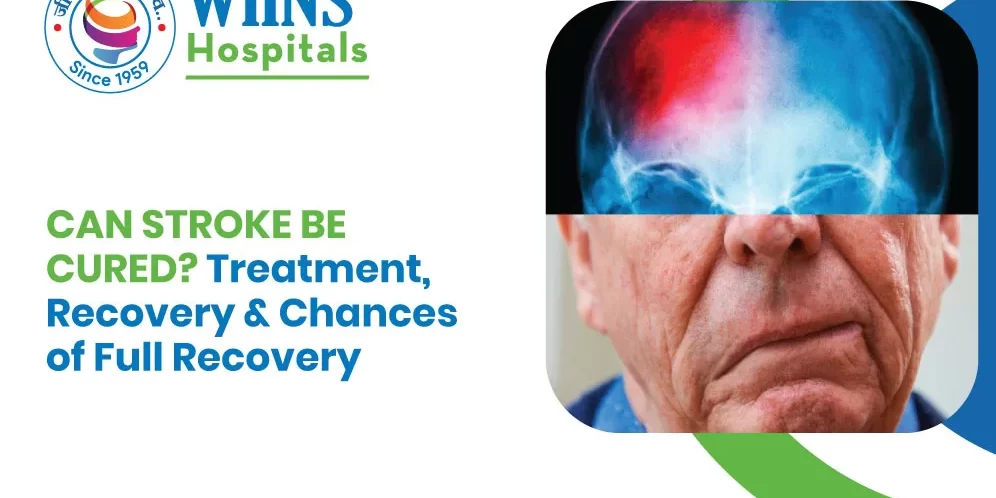
A stroke, whether it’s ischemic or hemorrhagic, requires emergency treatment to control damage to the brain cells. A cure requires an intensive rehabilitation program, which focuses on rebuilding your motor and sensory skills, depending on the level of damage.
Can Stroke Be Cured? Treatment, Recovery & Chances of Full Recovery
A stroke, also called a brain attack, occurs when blood supply to the brain is compromised. Reduced oxygen and blood supply to the brain can damage brain cells. It’s classified into two types: Ischemic stroke, in which a blood clot blocks the blood vessel that supplies your brain, or Hemorrhagic stroke, which occurs when a blood vessel bursts, causing bleeding inside the brain.
Now, a common question is: can stroke be cured? It depends on what you mean by cured. At WIINS, a stroke treatment hospital in Kolhapur, the goal is to restore normal blood flow to the brain, prevent another stroke, and limit brain damage.
Stroke Treatment Explained
Identifying the type of stroke is the first step, because both ischemic and hemorrhagic strokes are opposite problems. A CT and MRI scan can give a clear picture of what’s happening inside your brain.
Ischemic Stroke Treatment
For ischemic stroke, the goal is to immediately restore blood flow to the affected part of the brain. The longer the brain cells remain without oxygen and blood supply, the higher the chances of severe damage.
Current guidelines suggest that clot-busting medicine can be administered intravenously within 4.5 hours of symptom onset. Medicines help dissolve the clot and restore normal blood flow. For clots affecting larger vessels, minimally invasive surgery that involves guiding a catheter to the blocked artery and physically removing the clot may be more effective.
Hemorrhagic Stroke Treatment
If you have a hemorrhagic stroke, the focus will be on identifying the location of the bleeding and controlling it immediately. A neurosurgeon in Kolhapur may put you on intravenous blood pressure-controlling medication to keep your blood pressure within the safe range and slow the brain bleed.
If there’s heavy bleeding, causing severe intracranial pressure, an emergency surgery may be performed to remove the fluid and blood and relieve the pressure.
Curing Secondary Effects of the Stroke
Treatment doesn’t end with controlling the bleed or dissolving the clot. After emergency treatment, the next step is rehabilitation. The stroke can affect your motor, cognitive, or sensory parts, depending on which part of the brain was deprived of oxygen and blood.
Rehabilitation programs are designed to help you relearn those skills. The dead brain cells can’t be recovered, but with intensive therapies, your brain can rewire itself, meaning healthy parts of the brain can compensate for the dead brain cells. This is called neuroplasticity, the most important part of your rehabilitation goal.
Can Stroke be Completely Cured?
The answer depends on the severity of the brain damage that happened before you got treatment. There isn’t a universal cure percentage for strokes. Two stroke patients who received early treatment may have different outcomes, depending on the areas of the brain affected.
Someone with a small stroke, affecting a limited part of the brain, may recover surprisingly well. Another person with a larger stroke that affects their consciousness, swallowing, speech, walking, and other abilities might require significantly more time to recover, and might still be left with disability.