


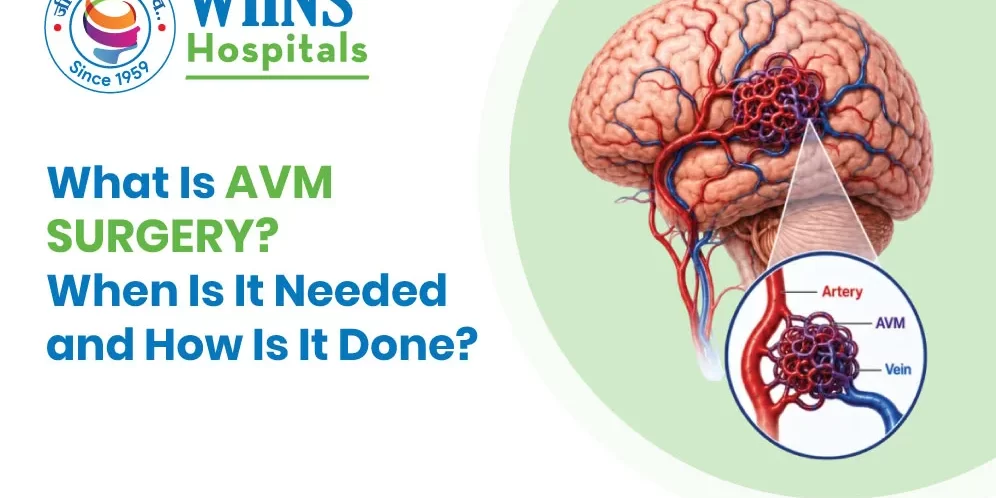
AVM surgery is a resection procedure in which an AVM — the tangled blood vessels that create an abnormal connection between veins and arteries — is removed. It may be needed if it causes bleeding in the brain, is located close to the brain surface, is within an easy-to-reach area, or causes seizures and other neurological issues.
What Is AVM Surgery? When Is It Necessary?
Arteriovenous malformation (AVM) occurs when your arteries and veins in the brain are abnormally connected without capillaries, and usually through a bunch of tangled blood vessels. Normally, your arteries supply oxygen-rich blood to your brain tissue and other organs, while veins are responsible for returning oxygen-depleted blood back to the heart.
Whether you need AVM surgery in Kolhapur or a less-invasive treatment option depends on your symptoms, location, blood flow, and the risk of bleeding.
AVM Surgery: What Happens During the Procedure?
The surgery involves accessing the AVM by removing a small portion of the skull. The doctor then uses microscopic tools to locate the tangled blood vessels. They seal the blood vessels supplying the AVM and carefully remove the entire AVM mass, keeping the surrounding healthy brain tissue undisturbed.
Once it’s removed and the bleeding is controlled, they may reattach the skull bone and close your scalp with stitches or staples. The surgery is followed by a short hospital stay.
When is AVM Surgery Needed?
At WIINS Hospital, AVM surgery is recommended when:
When There’s Increased Risk of Bleeding
If you have a history of brain hemorrhage or AVM with certain characteristics that might make bleeding more likely, surgery may be considered. A neurosurgeon in Kolhapur will take a closer look at your brain anatomy and the AVM’s location to determine how likely it is to bleed.
The surgery is considered an effective choice of treatment when the benefits of removing the malformation mass clearly outweigh the risk of complications if it’s not treated.
You Have Bleeding in the Brain
High blood pressure can weaken the walls of the arteries and veins. Over time, this increased blood pressure can cause the AVM to burst, causing bleeding in the brain. Intracranial bleeding can cause intense headaches, vomiting, difficulty speaking, seizures, and loss of consciousness. It’s a medical emergency.
You Experience Seizures
If you have symptomatic AVM, i.e., your scan reports show an intracranial bleed, or you experience seizures, severe, unbearable headaches, along with vomiting, weakness, numbness, and, in severe cases, loss of consciousness, surgery may be considered.
Symptoms can differ depending on the mass’s location and whether it irritates or presses on the brain’s tissue. It can also cause other neurological symptoms, such as weakness, numbness, coordination, and movement issues.
However, headaches and seizures do not necessarily mean you have an AVM. They are linked to other neurological conditions too. Resection is normally considered after your brain scans, including MRI, and other tests confirm a symptomatic AVM that is likely to cause complications.
When AVM Can Be Reached Safely
Location of the AVM matters a lot when deciding on an appropriate treatment plan. An AVM located away from vital structures of your brain might be easier to remove than the ones buried deep within the crucial parts that control speech, movement, and other functions.