

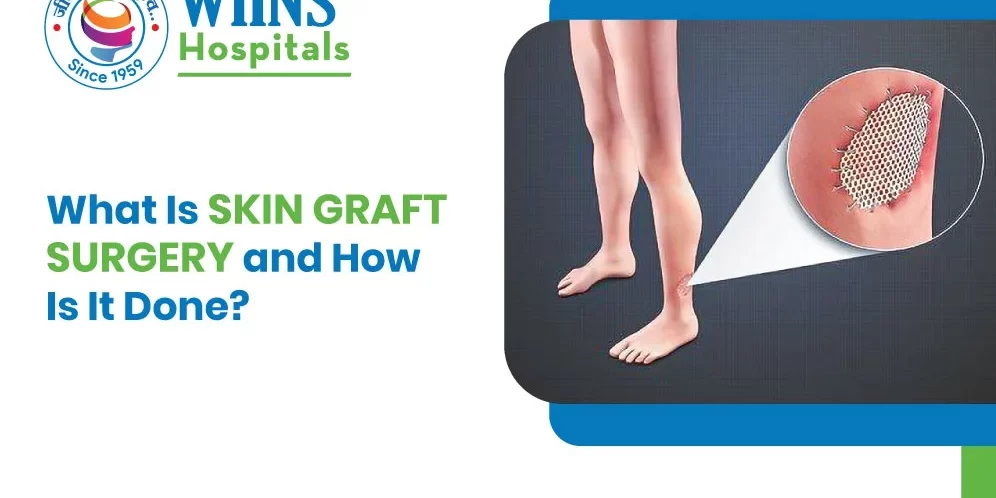
Skin graft surgery involves removing skin from healthy parts of the body and transplanting it into the area with severely damaged or lost skin. The surgery may be advised for patients with severe, third-degree burns, injuries, or skin cancer.
What Is Skin Graft Surgery and How Is It Done?
Skin graft surgery in Kolhapur is recommended when you have damaged or missing skin from injuries, burns, or skin cancer. Instead of leaving the wound without skin, this procedure helps transplant new skin that supports healing and creates a protective barrier around the wound.
Healing time from skin graft surgery can vary between patients and depends on many factors, such as graft size, surgical technique, and your health.
Understanding Skin Graft: What Is It?
A skin graft is a surgical procedure that removes skin from healthy parts of your body, also called the donor site, and transplants it into the area with severely damaged or missing skin.
The graft continues to receive blood and nutrients from the wound underneath, and eventually develops blood vessels. Over time, it attaches firmly to the surrounding skin and tissues. The procedure is different from a skin flap in that it doesn’t involve removing the skin with its blood supply and tissues.
Usually, healthy skin is used from the patient’s own body, but if there isn’t enough available to cover the wound, an allograft may be considered. It involves taking skin from a healthy donor’s body. In some cases, skin from an animal, such as a pig, could be used to temporarily cover the wound. It’s left in place until the wound heals and the new skin forms.
When is Skin Graft Surgery Needed?
Most minor injuries are closed with stitches. However, if there’s a significant portion of the skin missing, a plastic surgeon at WIINS Hospital in Kolhapur may recommend a skin graft. Here’s when a skin graft might be a reasonable treatment option:
- Serious burns
- Chronic wounds
- Infection
- Surgery that removes skin cancer and leaves behind a large wound
- Ulcers
- Bedsores
For instance, third-degree burn wounds can’t be treated with stitches, as there may not be enough skin to close the wound. Healthy skin can help cover the exposed area while it heals.
Once the skin graft is positioned over the wound, it is stitched or stapled. The doctor may put a dressing to secure it to the underlying tissue.
Types of Skin Grafts
Skin grafts can be:
Split-Thickness Graft
This removes the epidermis and part of the dermis and is usually preferred for areas that require a larger skin graft. Common donor sites include the belly, thighs, and buttocks. Because deeper skin layers remain intact, the donor site heals fairly quickly, usually within 1-2 weeks.
Full-thickness Graft
This involves removing the entire top layer and dermis beneath it. As a deeper portion of the skin is removed, healing takes longer, and the donor site is stitched immediately. A full-thickness skin graft is appropriate for areas that can’t be covered with clothing, such as the face.
Sometimes, composite grafts may be used for reconstructive procedures. This includes removing the thick skin layers along with cartilage and other tissues.