


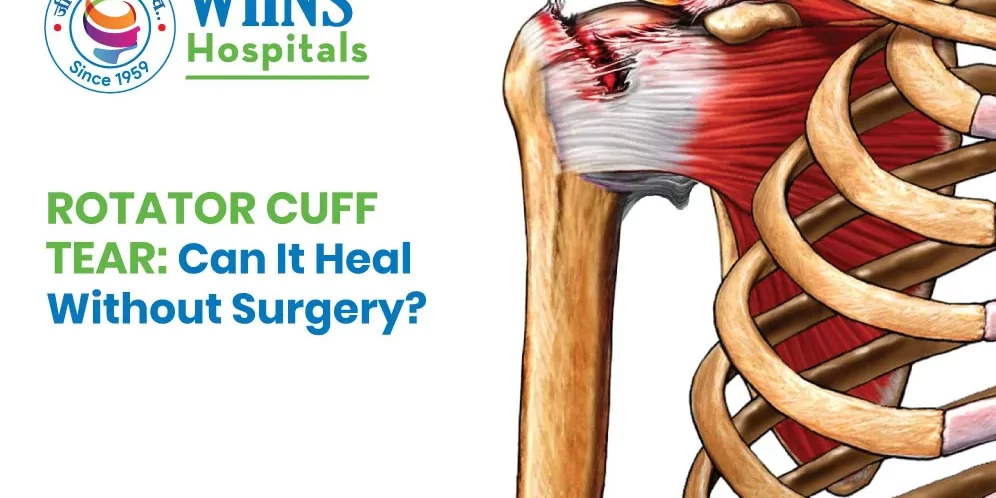
Most rotator cuff tear symptoms improve with non-surgical treatments, but surgery may be necessary if you have a large tear, severe pain, or restricted movements that won’t improve with conservative treatments.
Rotator Cuff Tear: Can It Heal Without Surgery?
A rotator cuff is a group of muscles and tendons that allow you to lift and rotate your shoulder joint. A rotator cuff tear occurs when one of these tendons is injured, damaged, or separated from the bone it’s attached to. It can occur from repetitive use of the shoulder joint, lifting heavy objects, or from a fall or direct injury to the shoulder joint.
This can make simple shoulder movements painful. Whether it can heal without needing shoulder surgery in Kolhapur depends on the severity and size of the tear, your activity level, your age, and how well your shoulder responds to non-surgical treatments.
Can Rotator Cuff Tear Heal Without Surgery?
No, a rotator cuff tear cannot be reversed. In other words, a torn or damaged tendon cannot reconnect to the bone with non-surgical treatments.
However, surgery isn’t needed for every patient with a torn rotator cuff. Many regain muscle strength and near-normal shoulder function with non-surgical treatments. The other tendons and muscles can sometimes compensate for the torn tendon. Many people also report reduced pain and improved activity levels with regular physical therapy.
However, this doesn’t imply that all rotator cuff tears can be healed without surgery. Conservative treatments can effectively manage pain and shoulder function, and your body may eventually adapt to the torn tendon, but it can never reattach automatically.
Treatment Options for Rotator Cuff Tear
Treatment for a rotator cuff tear can be surgical or non-surgical. Let’s understand each.
Immobilize the Shoulder
Initially, you may be advised to reduce activities that put excessive pressure on the torn rotator cuff. You may have to limit certain movements, such as avoiding heavy lifting or overhead movements.
Additionally, an arm sling might be used to immobilize your shoulder, giving it the time and rest it needs for healing.
Physical Therapy
The core element of your rehabilitation program is physical therapy. Your therapist will assist you in practicing exercises that strengthen your shoulder muscles, improve your range of motion, and enhance flexibility.
Note that physical therapy doesn’t mean practicing aggressive exercises or high-intensity workouts. You must work with a professional therapist to prevent the injured shoulder from worsening.
Medication
Pain relievers and NSAIDs can help relieve inflammation, swelling, and pain around the injured area. If needed, corticosteroid injections may be recommended to provide short-term relief from pain.
This allows you to move your shoulder joint and participate in physical activity. However, corticosteroids are carefully administered, especially repeated injections, as they carry an increased risk of complications after surgery (if surgery is scheduled shortly after this injection). While medication may be effective in relieving pain, it can’t help your tendon grow back together.
Surgical Treatment for Rotator Cuff Tear
When non-surgical treatment fails to restore adequate shoulder function or relieve pain, surgery may be a reasonable treatment choice. It’s also advised when you have a larger tear. During surgery, an orthopedic doctor in Kolhapur may repair and reattach the tendon to the upper arm bone arthroscopically.
