

Treatment for Trigeminal neuralgia includes surgical and non-surgical options. Medication is commonly used as first-line treatment, but if that’s ineffective, surgery, such as Microvascular Decompression, may be discussed.
Trigeminal Neuralgia Treatment Options: Medication vs Surgery, Which Is Better?
Imagine dealing with severe, stabbing, and electric shock-like pain on your face that keeps occurring when you touch your face, brush your teeth, apply makeup, shave, or simply go out in gusty weather. All these are the symptoms of trigeminal neuralgia—a medical condition that causes recurring episodes of severe facial pain that last a few seconds to a couple of minutes.
For many people, trigeminal neuralgia treatment in Kolhapur is unavoidable. The recurring pain, which is triggered by simple day-to-day activities, can be too much to tolerate. Some find relief with medication, while others might need a more invasive medical approach.
What Causes Trigeminal Neuralgia?
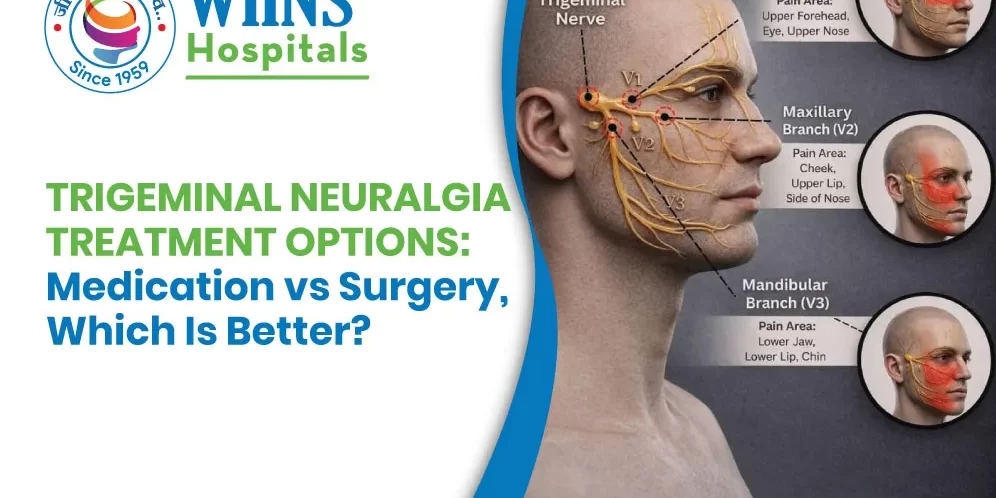
The most common cause of trigeminal neuralgia is a blood vessel pressing the trigeminal nerve near the brainstem. The protective covering of the nerve wears away gradually. When this protective sheath is damaged, the nerve starts sending abnormal pain signals to the brain.
Medical conditions, such as multiple sclerosis, can also damage this protective layer, called myelin, exposing the nerve. Other causes include facial injury, tumor growth, or blood vessel abnormality, all of which can destroy myelin over time.
Non-Surgical Treatment
For those who have been recently diagnosed with trigeminal neuralgia, medication is used as first-line treatment. Unfortunately, regular paracetamol doesn’t work. A neurologist may prescribe carbamazepine—a drug that controls abnormal electrical activity in the brain.
Your doctor may advise you to take these medicines regularly. This prevents recurring painful attacks. For most people, medication helps. However, not everyone shows a positive response to the medication. Some may not find significant relief, while others switch to other drugs, such as baclofen, gabapentin, or pregabalin, due to the side effects.
Surgical Options
A neurosurgeon at WIINS Hospital in Kolhapur recommends surgery when a patient experiences recurring pain despite taking prescription medication. The most popular surgical approach is Microvascular Decompression.
MVD involves opening up the skull to find the root source of pain. For example, if the surgeon finds blood vessels pressing against the nerve, they may gently move them away from the nerve and place a protective material between the two to prevent them from rubbing against each other.
The biggest benefit is that the surgery doesn’t involve deliberately injuring the trigeminal nerve, thus lowering the risk of facial numbness or tingling.
While it’s the closest possible treatment option for trigeminal neuralgia, with the potential to offer long-lasting relief, the surgery comes with many risks. Besides, it doesn’t guarantee to eliminate pain. Around 6% of patients might have recurring pain after MVD in the first year after surgery.
Alternatives to Surgery
Gamma Knife is a non-surgical alternative to MVD, and a highly viable choice for patients who aren’t in a state to undergo major surgery. It involves delivering targeted radiation at the nerve site to block pain signals. The results can take weeks to months, though.
Botox injections are also used as treatment for trigeminal neuralgia, but it has many side effects, including numbness or a tingling sensation on your face.
Balloon compression and Glycerol rhizotomy are other treatments, but the pain relief might not last long. Besides, they affect the trigeminal nerve, so expect facial numbness as a side effect.