


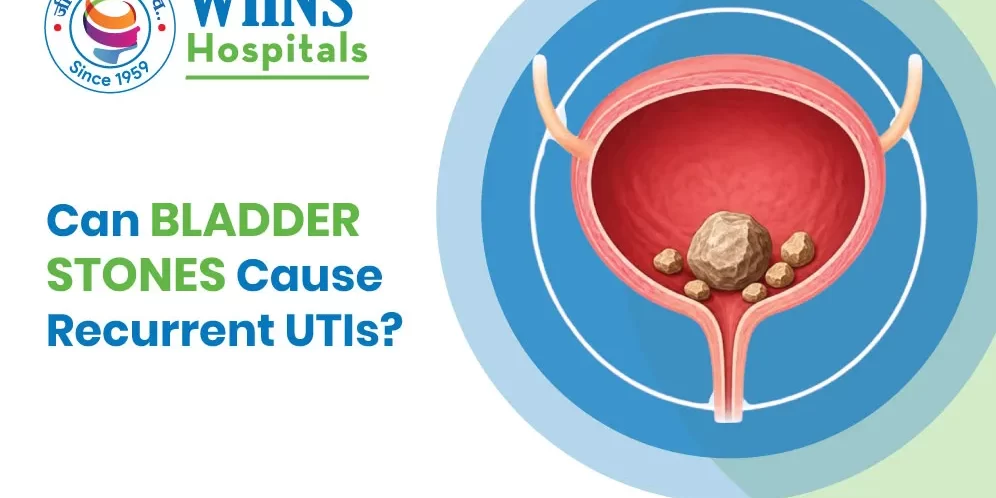
Yes, bladder stones are linked to an increased risk of frequent urinary tract infections. The stones might cause bladder irritation and urination issues, which may get worse if it coexists with UTI.
Can Bladder Stones Cause Recurrent UTIs?
If you’ve developed repeated urinary tract infections (UTIs) despite completing a course of antibiotics, an underlying issue may be creating an ideal environment for bacteria to thrive. One such possibility is bladder stones. These lumps in the bladder can affect urine flow, bladder emptying, and may irritate the bladder wall.
They also make you more prone to developing a UTI. In fact, repeated UTIs can sometimes indicate bladder stones. Here’s what these stones mean and when you should see a urologist in Kolhapur.
Bladder Stones: What Exactly Are They?
Normally, your urine is stored in the bladder until it’s released through urination. Minerals in the urine can accumulate when it sits in the bladder for a prolonged period.
These collected minerals can form crystals, which may later turn into hard deposits or stones. Their sizes can range from small, grain-sized stones less than 0.5 cm to stones larger than 1.5 cm.
Some small bladder stones can pass on their own through urine, while others, especially those growing large, can irritate your bladder wall or increase the risk of frequent urinary tract infections. You need bladder stone treatment at WIINS Hospital in Kolhapur if you have been developing frequent UTIs.
Symptoms of Bladder Stone
Bladder stones may not cause symptoms unless they grow large enough to irritate the bladder lining. Here are the common symptoms:
- A stinging feeling when passing urine
- An urge to urinate more frequently
- Pain in the lower abdomen
- Urine might contain visible blood. Sometimes, the blood is present in very small amounts and can only be detected under a microscope.
- Your urine might have a bad odor
- The stone can affect the urine flow. Many people with bladder stones experience difficulty starting urination or maintaining a normal flow.
- The pain may come and go, but can feel worse when urinating
- You might develop recurring UTIs
How Can Bladder Stones Cause UTIs?
Bladder stones and UTIs are connected. With bacteria living in the bladder, the risk of repeated episodes of UTI might increase. Here’s how it happens.
Bacteria Stay in the Bladder
Antibiotics may clear a bacterial infection, but bacteria can create a strong layer on the surface of the stone, which is also called biofilm. This allows them to stay inside the bladder. The active infection might clear, but these remaining bacteria can thrive and cause another infection later.
It Affects Urination
A bladder stone can block the bladder opening, thus preventing the urine from flowing freely. When urine sticks in your bladder for a long period, bacteria get the right environment to develop, thrive, and multiply. This can cause repeated infection.
It Can Irritate the Bladder Lining
Depending on the size, location, and number of stones, these hard deposits can rub against the bladder lining. This can irritate the bladder and might cause inflammation.
This can make urination painful and might also cause a burning sensation when urinating. Bladder irritation doesn’t necessarily mean you have an infection, but if it occurs with a UTI, the urinary symptoms can feel worse.